Gloword
by NCJK Prototype
Write it down, and publish it on purpose.
- Category
- Personal publishing archive
- Status
- Web prototype (Phase 6)
- Interface
- Korean and English
- Role
- Product, design and engineering by NCJK
Not public yet. No link until it can be used.
The problem
What you make ends up scattered, and shaped by someone else’s feed.
Writing lives on a blog, projects on a portfolio site, images in the cloud, notes somewhere else. Each platform decides the format, and publishing is tied to a feed that asks to be fed.
Purpose
One archive that is yours.
Gloword is a personal publishing space. You write in Markdown, keep images and records alongside, and publish only the pieces you choose, as projects, journal entries, galleries or an archive.
The core experience
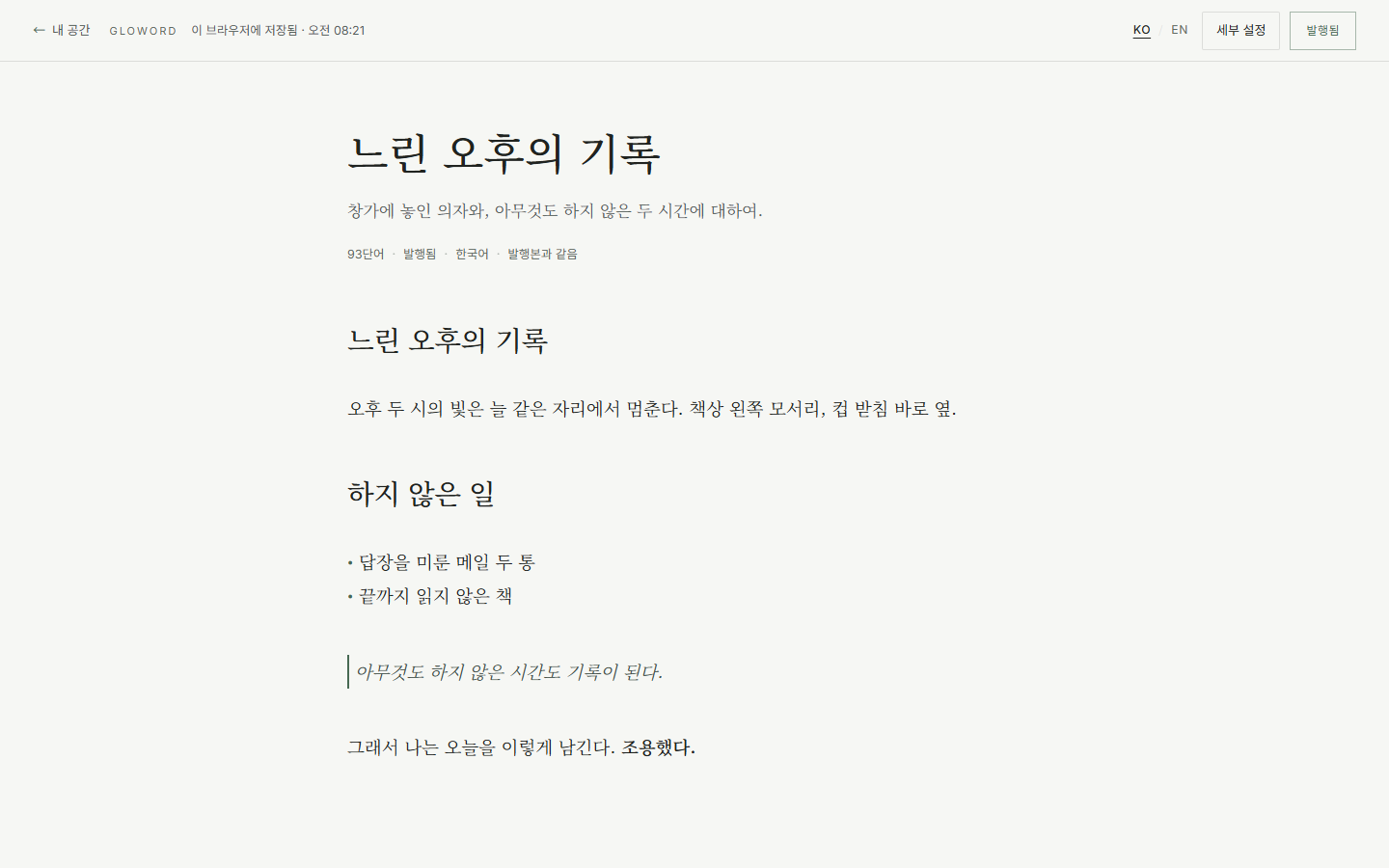
Markdown that reads like a page while you write.
The writing studio formats Markdown in place as you type, at a comfortable reading width with generous Korean line spacing. Drafts are saved on the device. Publishing is a separate, deliberate step that creates a public copy.
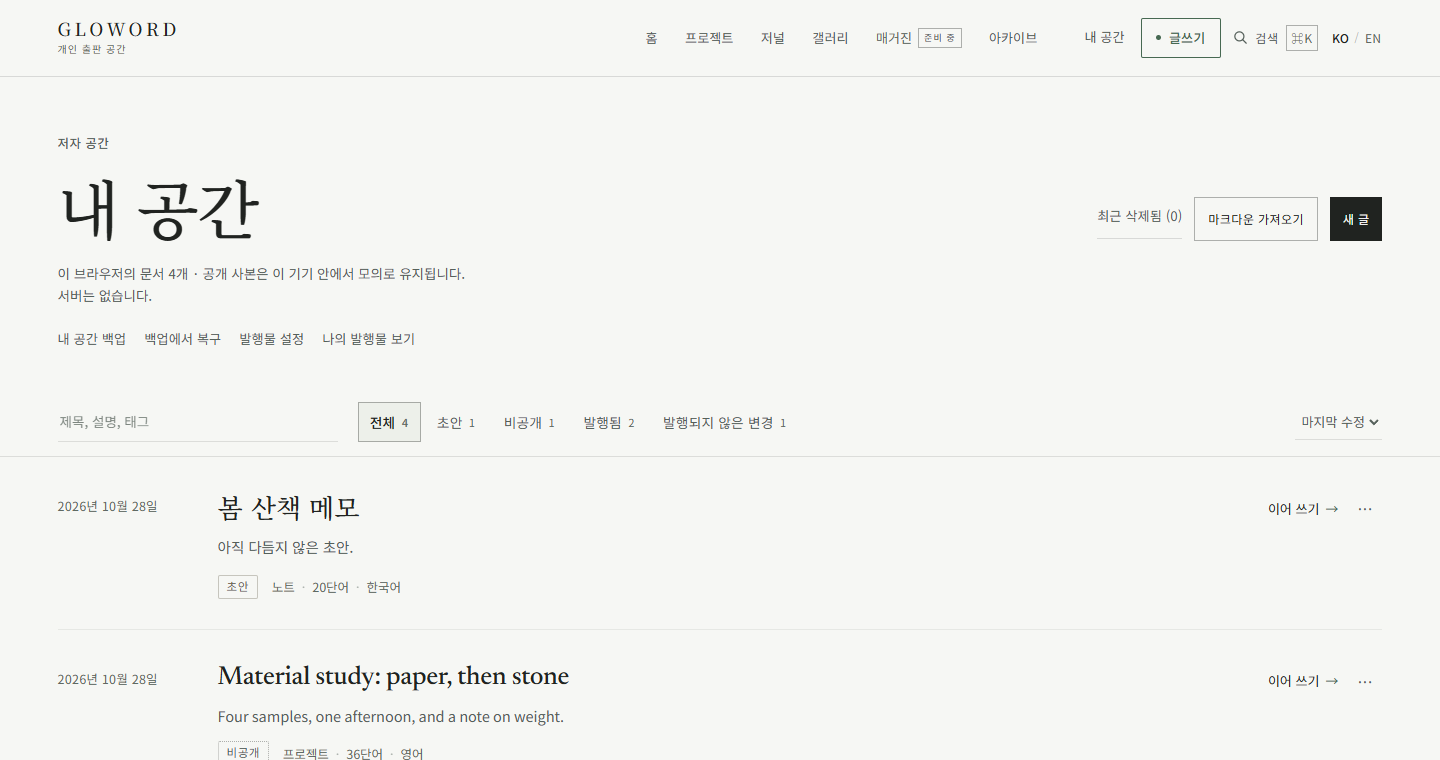
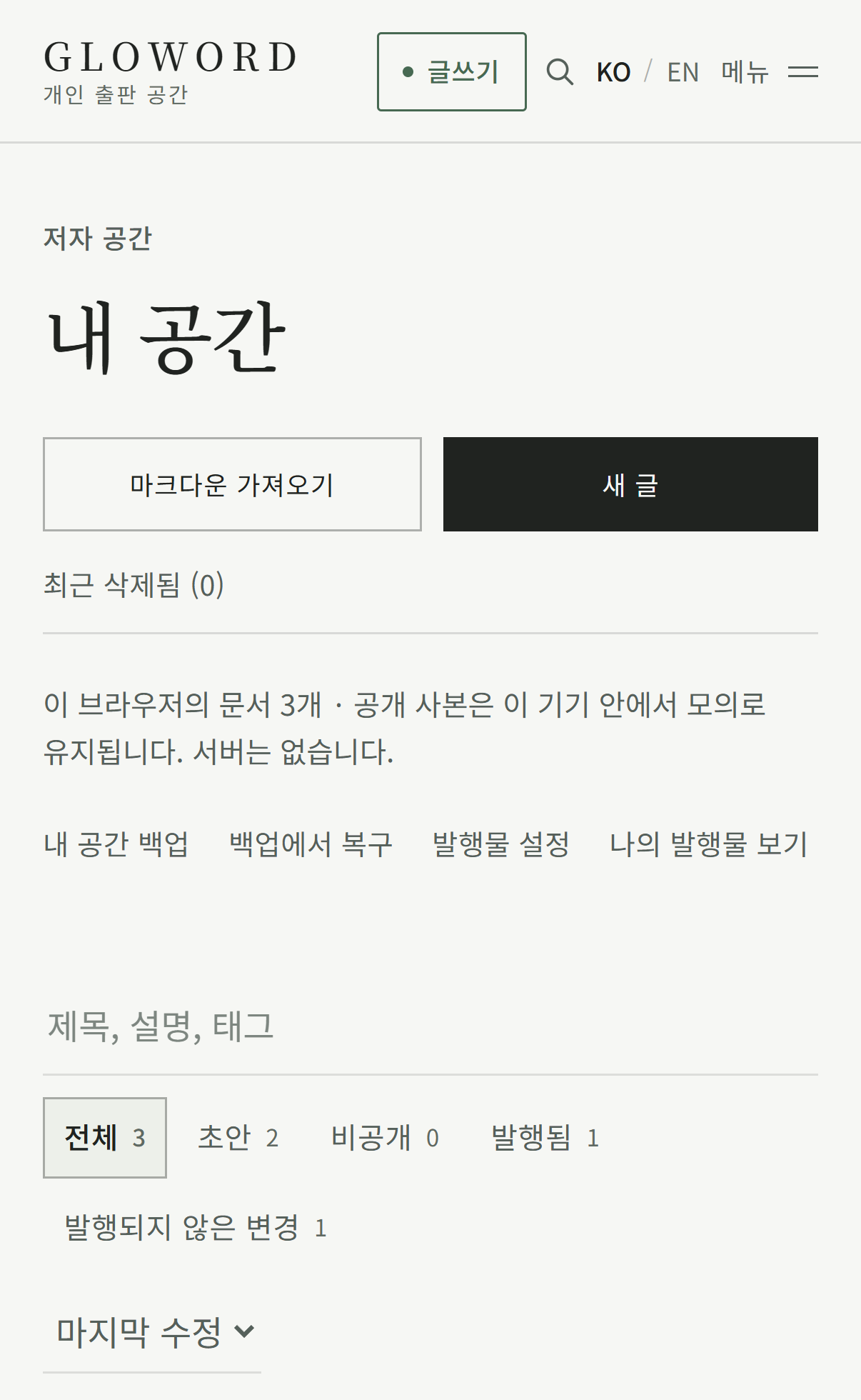
Gloword prototype, Phase 6, with sample content. Publishing is simulated on the device; there is no server yet.
Design decisions
Five decisions that shaped it.
-
Markdown is the source.
Every piece is a plain Markdown document. It can be exported as a ZIP with its images, and the whole space can be backed up and restored.
-
Saving is not publishing.
Autosave keeps drafts safe. Publishing goes through its own dialog and check, then creates a snapshot; nothing becomes public by accident.
-
Private stays private.
Public pages read only from published copies. Drafts and private pieces never appear in search, the archive or the author page.
-
Deleting can be undone.
Deleted pieces wait in Recently deleted with their images. A restored piece always comes back private, so publishing it is a new choice.
-
No feed, no AI writing, no analytics.
A magazine-like editorial design with large serif type, white space, thin rules and one archive green. The words carry the page.
Where it runs
- Web Prototype Phase 6, a design-freeze candidate, not released
- Phones Prototype Laid out and checked at phone width
- Publishing server Next Real public pages arrive with production development